Hey everyone,
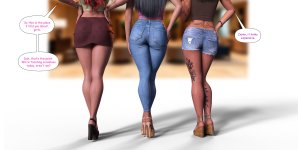
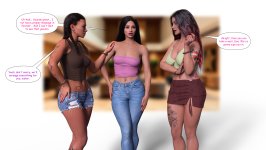
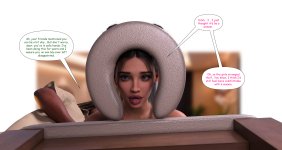
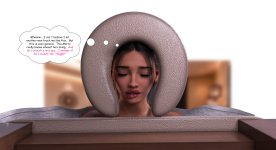
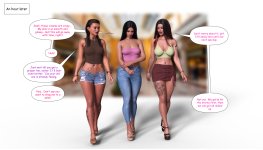
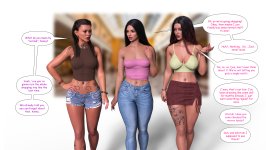
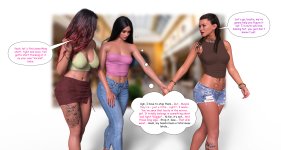
I’ve been watching this discussion again with one laughing and one crying eye. And honestly, I keep thinking: if the problem really is that our main character changes too much visually from panel to panel, there is actually a pretty practical way to improve this.
LoRA — Low-Rank Adaptation. Before we spend another five pages arguing about her face , maybe this is worth looking at.
The nice thing is that experimenting with this doesn’t necessarily require some huge expensive setup. There are open-source tools like Draw Things and others that can be used for this, and if your own hardware isn’t powerful enough, GPU time can also be rented online.
So why do I think a LoRA could help here?
Think of it as teaching the AI:
“This is HER.” Instead of trying to describe the same woman again and again with prompts, you train a small model on carefully selected images of that particular character. Face, hair, proportions, characteristic features, general appearance. It doesn’t magically guarantee 100% identical results in every possible situation — AI is still AI — but it can make character consistency
much, much better.
And the interesting part is:
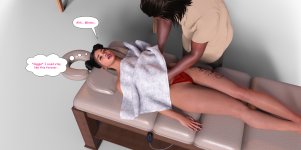
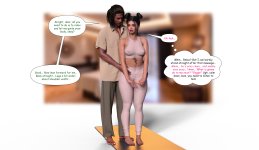
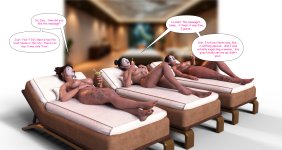
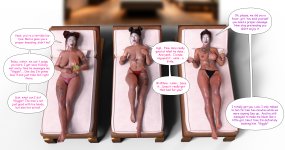
The material is already there. We now have so many panels and renders of our heroine that there should be enough good reference material to build a carefully selected dataset. Pick the strongest and most consistent images, prepare them properly, train the LoRA… and use that as the reference going forward. And because most of the comic already seems to be rendered anyway, I wouldn’t even suggest replacing the existing workflow. Quite the opposite.
3D render → Img2Img → character LoRA → final panel
The artist could still create the scene, pose, lighting, clothes, composition etc. exactly as before. Then the existing render becomes the Img2Img reference, while the LoRA helps pull the character back toward the established appearance. That seems much more useful to me than expecting AI to invent the whole panel from scratch. Would it need some testing? Of course. Would the dataset and settings matter? Absolutely. Would it solve every single consistency problem with one click? Nope. But could it be a practical way to make our heroine look much more like
the same person from panel to panel? I think so.
And this is the part I sometimes don’t understand about discussions here: We can spend pages saying
“her face changed again” or
“she doesn’t look like the same character anymore.” Okay. Fair criticism. But then let’s also talk about possible solutions.
Constructive criticism + an actual idea for fixing the problem.
That moves things forward. Everything else eventually becomes a little bit…
bla bla bla.
Just an idea. Maybe it’s useful, maybe it isn’t — but I thought it was worth putting on the table.
XO,
Lexa 


 www.patreon.com