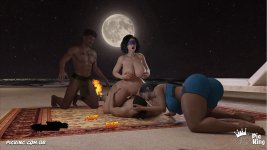
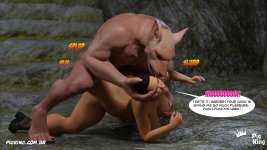
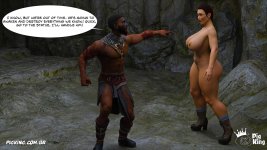
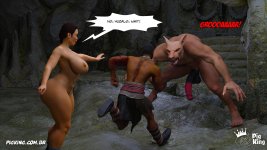
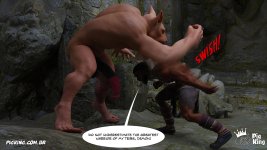
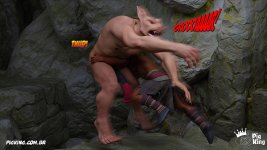
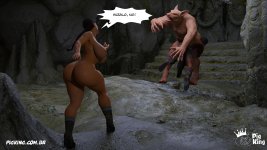
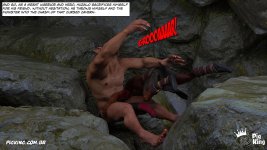
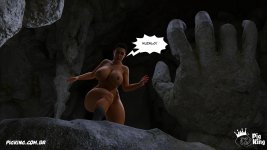
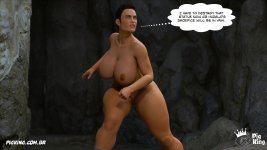
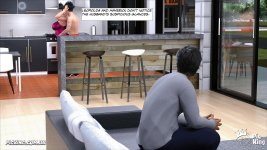
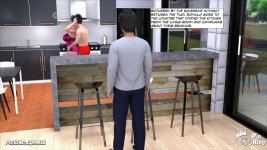
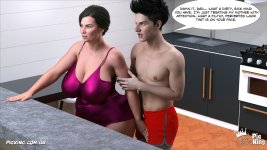
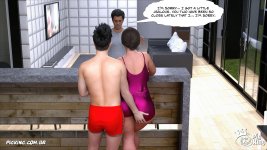
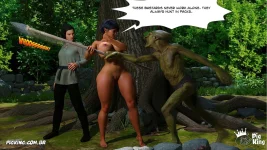
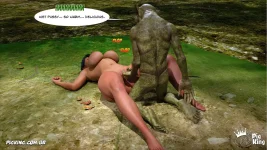
Undoubtedly, PigKing’s creations strongly engage with absurdity and exaggeration, elements that, in certain contexts, can be read as humor. When analyzing the work from an external perspective, it is possible to argue that part of the audience interprets its aesthetic as containing comedic traits, especially due to the intense use of the grotesque and the almost caricatural amplification of the scenes.
When excess becomes evident, the internal logic of the work shifts from realism to a hyperbolic dimension. This shift can generate a nervous, uncomfortable kind of laughter, triggered by the breaking of expectations. Repetition, bodily intensification, and visual saturation end up transforming the initial shock into something that borders on the absurd.
However, this interpretation depends far more on the viewer’s reception than on the author’s declared intention. If there is no structured irony or explicit critique, the humor emerges as a byproduct of extreme exaggeration rather than as a central proposal. For outsiders, PigKing’s work may oscillate between grotesque fetishism and an aesthetic that approaches shock humor, precisely because it provokes an ambiguous reaction in which discomfort and laughter coexist.
And regardless of these aesthetic classifications, personal appreciation for the work can still remain. Critical analysis and personal taste are not opposites. One can discuss conceptual frameworks while still genuinely enjoying the work, especially specific productions such as Teddy’s, which display their own distinctive qualities within this creative universe.