tanuno
Well-known member
[SirNoddy] - Wedding night
Ever since the Norman Conquest, low-born English wenches have been essential for the provision of good breeding stock for their overlords.
The Baron here can trace his lineage all the way back to Roger de Totti of Rouen, who was a fearsome warrior in William the Bastard’s invading army in 1066. Roger was among those who gleefully ravaged and ravished their way through Anglo-Saxon maidenhood in those dark times.
The result, of course, is today’s aristocracy. And despite much intermingling of Norman and Saxon blood in the intervening years, some of the less savoury customs of the upper classes endure.
The instinctive craving to dominate the vanquished natives continues to this day. The Baron, like many of his noble ilk, owns a pair of “strait-breeches”, an unnecessarily cruel item of wifely apparel designed to keep one’s spouse under proper control.
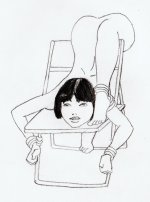
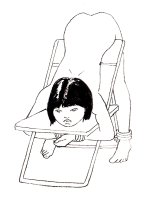
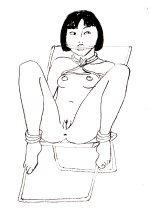
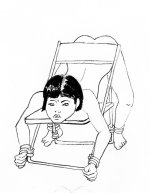
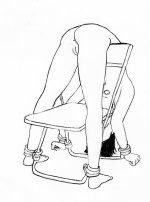
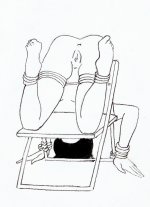
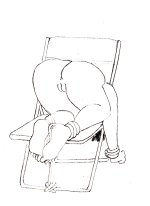
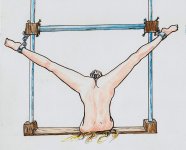
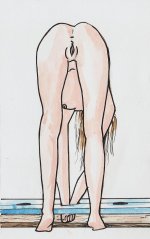
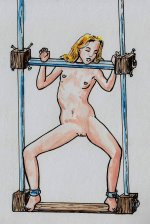
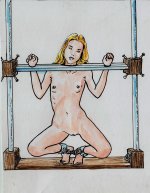
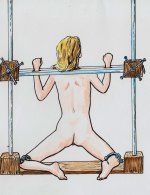
The device hasn’t changed much since the 11th century! Every new wife must face the ordeal of being stripped off, tightly strapped up and strictly admonished by her new master. Note, for instance, the sturdy martingale, which can be adjusted to ensure just the right angle of waist-bend, which presents the helpless damsel’s derriere for attention.
The traditional custom, on a noble’s wedding night, is for the husband to deliver a chastening thrashing to his new bride, after which a rough coupling must immediately occur – all of which takes place in front of the domestic staff of the household so that the master’s inexhaustible masculinity can be witnessed by all!
It’s not as cruel as fox hunting, I suppose, and many a local lass has survived the torment to become fully assimilated into the gentry!
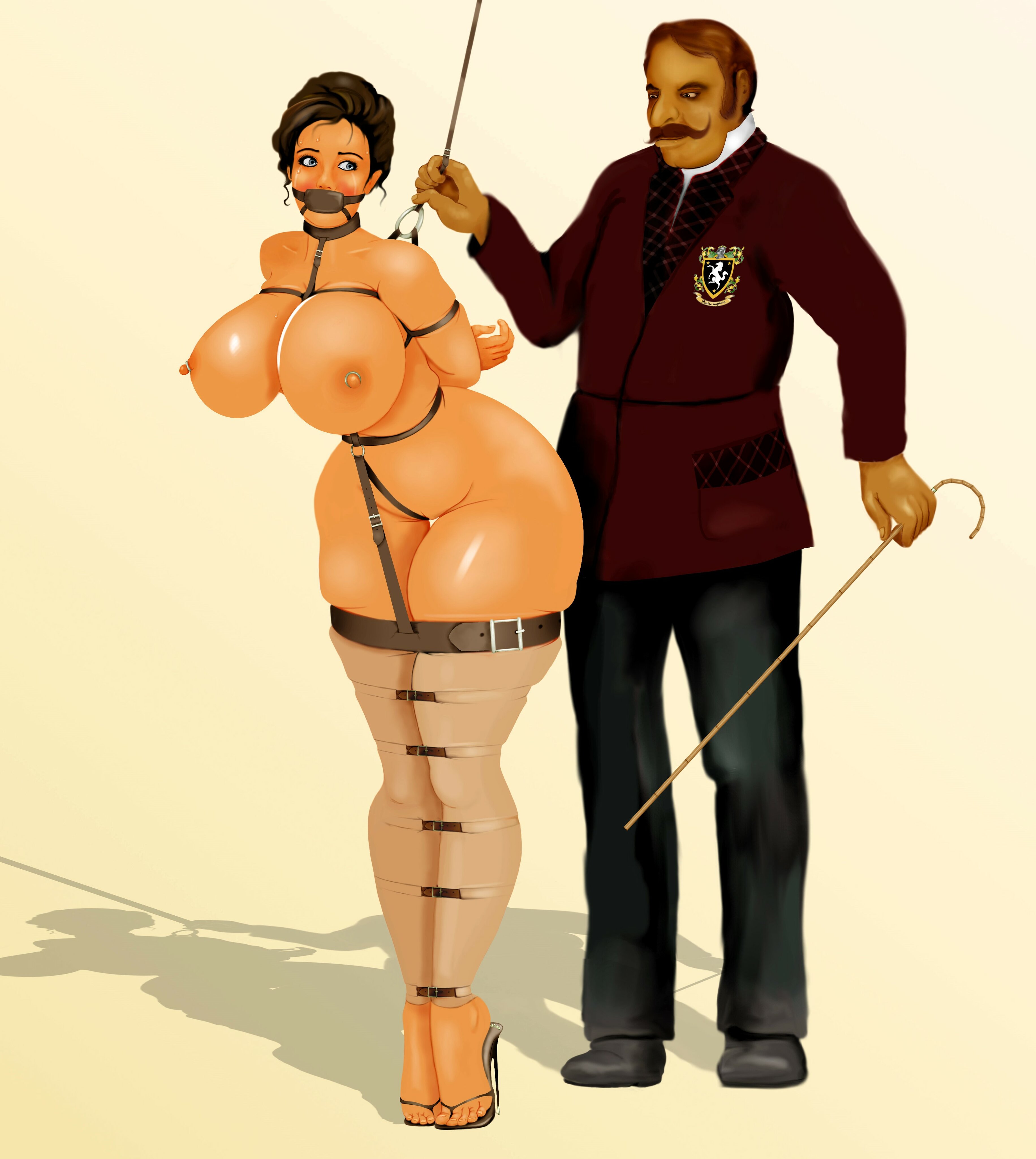
Ever since the Norman Conquest, low-born English wenches have been essential for the provision of good breeding stock for their overlords.
The Baron here can trace his lineage all the way back to Roger de Totti of Rouen, who was a fearsome warrior in William the Bastard’s invading army in 1066. Roger was among those who gleefully ravaged and ravished their way through Anglo-Saxon maidenhood in those dark times.
The result, of course, is today’s aristocracy. And despite much intermingling of Norman and Saxon blood in the intervening years, some of the less savoury customs of the upper classes endure.
The instinctive craving to dominate the vanquished natives continues to this day. The Baron, like many of his noble ilk, owns a pair of “strait-breeches”, an unnecessarily cruel item of wifely apparel designed to keep one’s spouse under proper control.
The device hasn’t changed much since the 11th century! Every new wife must face the ordeal of being stripped off, tightly strapped up and strictly admonished by her new master. Note, for instance, the sturdy martingale, which can be adjusted to ensure just the right angle of waist-bend, which presents the helpless damsel’s derriere for attention.
The traditional custom, on a noble’s wedding night, is for the husband to deliver a chastening thrashing to his new bride, after which a rough coupling must immediately occur – all of which takes place in front of the domestic staff of the household so that the master’s inexhaustible masculinity can be witnessed by all!
It’s not as cruel as fox hunting, I suppose, and many a local lass has survived the torment to become fully assimilated into the gentry!